I just published my latest flyfishing video on YouTube. I think it's one of my best. I hope you enjoy it! BTW, Don't forget to select the high-definition setting by clicking the gear symbol in the lower right corner of the YouTube window.
Sunday, August 24, 2014

Friday, August 22, 2014
Return of the Sea Grasses
Guides and frequent anglers on the lower Laguna Madre often comment on macro-level changes that they have observed over the years. And what I find is that we are often like the 10 blind men and the elephant. That is, each of us is "touching" one facet of the whole, and describing the whole in terms of their narrow experience. It's human nature to extrapolate on what we see and experience, thereby projecting a highly subjective view upon a rather complex and multifaceted whole.
There are several observations that are factual, however. The seagrasses took a huge hit from the fresh water inflows about five seasons ago. Over 30 inches of rain fell in the Mexican mountains to the south of us, and the water poured into the Rio Grande River watershed over the course about six weeks. The Arroyo Colorado is part of the flood diversion system in the Rio Grande Valley, which is designed to protect riverside communities on both sides of the border. But we will all remember the sights and sounds of the smelly and turbid water that literally raced overland into Payton's bay and created 5-foot troughs in the Arroyo Colorado. Interestingly, we were still able to find clear water to the south of the mouth of the Arroyo that summer, and did fairly well.
The impact on the bay was immediate and long-lasting, especially in areas north of the mouth of the Arroyo. Between the mouth and Port Mansfield, huge amounts of rainwater flooded the bay, and brought carp and gar and alligator into otherwise hypersaline areas. It was a strange and disturbing experience, but the clear water returned after a few weeks of runoff. Unfortunately, perhaps, the seagrasses were decimated in those areas, and didn't recover until…well, really, not until this year, by my estimation (keep in mind that I am a blind man, too!). The odd thing was that some areas that were normally devoid of seagrass--like the sand, and areas south of the mouth--became seagrass nurseries, and still have more grass than they ever did. And now, finally, Payton's Bay looks like a manicured lawn beneath a few inches of clear water. The shoal grass, especially, is thick and unbroken except for prop cuts. The ducks will take their toll on the grasses this fall and winter, as they pluck the grass from the bottom in their search for food, but next year should feature an even thicker seagrass recovery.
Before the flood, turtle grass was replacing the shoal grass as the dominant grass in the lower Laguna. Biologists referred to this phenomenon as a the end point of a long process, much like a "climax woodland." However, the turtle grass has become scarce in the aftermath of the flood. It's as if the flood reset the clock on seagrass development, and created a new opening for shoal grass, which is wonderful habitat for juvenile crabs and shrimp. So perhaps the flood was a good thing, similar to the fires in Yellowstone Park--immediately disturbing and unsightly, but purposeful from the standpoint the big picture.
Before the flood, turtle grass was replacing the shoal grass as the dominant grass in the lower Laguna. Biologists referred to this phenomenon as a the end point of a long process, much like a "climax woodland." However, the turtle grass has become scarce in the aftermath of the flood. It's as if the flood reset the clock on seagrass development, and created a new opening for shoal grass, which is wonderful habitat for juvenile crabs and shrimp. So perhaps the flood was a good thing, similar to the fires in Yellowstone Park--immediately disturbing and unsightly, but purposeful from the standpoint the big picture.
Another observation, which apparently is false, is that the redfish have declined. Not so, say the Texas Parks and Wildlife biologists. I have to agree that I've not noticed any decline in redfish in the back lagoons. If the reds are not in decline, then why do reputable guides and veteran anglers say that they are diminished in number? It's probably because these observations are based on "sampling" in the same areas year after year. And the fact of the matter is that the reds will move from place to place in search of food. Some areas, such as the lagoon just north of the mouth of the Arroyo (the Mud Hole) can wax and wane like the moon from season to season. Indeed, the Mud Hole can be the highest producing venue one year, and yet be a consistent disappointment the next, probably because of the movements of the shrimp hatch from back lagoons into the Intracoastal on their way to the Gulf. I have waded in the Mud Hole on occasion, to find so many shrimp jumping ahead of me that I could feed my family with a dip net. But that phenomenon isn't reliable. Anglers typically base their conclusions on comparing the fish population in the same area from visit to visit without taking into account changes in food availability, tide, etc. T'is human to deny the larger truth.
Another observation, which is undeniably true is that the big trout population has exploded. This is in spite of the tendency of anglers to hammer them with live croaker--a method that biologists say they cannot resist because croaker are natural enemies that eat trout eggs. Even guides who would fly fish all the time if their client population would support it, will turn to croaker for the purposes of providing "instant success" to anglers who don't know the first thing about these great predators and their rythmns. I may sound cynical, and I am. Still, the trout populations have resisted over-predation from opportunistic anglers, and with the help of the Texas Parks and Wildlife, I have hopes that this greatest fish of the mother lagoon will continue to thrive.
What do you think has changed about the bay? Do you think your observations are objective, or based on "touching one part of the elephant?" Let us know.
Monday, August 18, 2014
Return from Colorado and Occam's Razor
Julie and I just returned from a week in the South Park area of Colorado. My brother Chip and his wife Sandi have a house about 9200 feet above sea level, and near several top flyfishing streams. So, of course, we had to go visit :-). Actually, my main goal in going to CO was to show Julie some country she'd never seen, and to visit our family. Chip and I don't get to fish that much anymore, because he spends the best part of the season in CO. He and I flyfished three days in a row, and had the privilege of having his son Spencer, who lives in Denver, join us for the second day. The fishing was disappointing for Chip and Spencer, but I was pretty happy with our success. We caught over 30 trout the first day, fishing a stream that was only a few feet wide. The second and third days were less productive, but the fish were larger.
When Julie and I returned home, she surprised me by saying that she wanted to learn to fly fish. I was stunned, because she had told me previously that fishing wasn't important to her. But I think she finally caught the flyfishing bug by watching, and by becoming entranced by the beauty of casting. So…we left the dock yesterday morning with our companion Rosie, and headed for the sand where I proceeded to give her her first fly casting lesson. I'd thought about how I would approach the lesson beforehand, and it went really well. I can tell within a few minutes if a person has an aptitude for flyfishing, and it was immediately evident that Julie's innate capacity for mind-body connection was evident in the way that she was able to incorporate each piece of instruction into her body memory. After only a few minutes, she exhibited a clean stroke, and was shooting line. Given her obvious aptitude, I opted to take her on a wade, to see if we could get some close-in shots. Alas, we only saw sheepshead, so after a few minutes, we went back to the boat and headed west to a favorite west-side lagoon where I've had remarkable success on our last two outings. See my posting, "Stopping and Seeing."
We went to the lagoon, mainly to locate and mark an underwater obstruction that nearly sank my Stilt a couple of weeks ago, when I hit it while leaving the area with two clients aboard. But it was much too windy and the tide was too deep to see whatever it was that we hit. So I gave the area a wide berth, and stopped along the edge of some clear water, where my clients have done so well over the past month or so, and where I have landed some very big reds.
Julie didn't have her wading boots, so she couldn't wade the soft bottom; but she encouraged me to fish alone. I had very little desire to fish, but nonetheless, I grabbed my rod and waded with Rosie into the area where single casts had landed 27.5" and 30" redfish on my last two visits to the muddy lagoon.
I waded without casting, observing the water carefully and hoping to see a big trout in the secluded area. The water was clear, but the fish were clearly elsewhere. Rosie and I waded a half circle around the boat, and were ready to head back to the Stilt, when nature called. My hands were occupied when I spotted the only game fish I'd seen since leaving the boat. The redfish swam up to me, saw me (my face, of course!), and spooked. I thought it was all over, so I went back to the business at hand; but then I saw the redfish again, swimming only a few feet away. Somehow I freed my casting arm, and casted the mother's day fly ahead of the cruising red. It was my first cast of the day. The red saw the fly, and struck it with force. Somehow, I was able to set the hook, and put things to right while the red streaked off on its first run. A few minutes later, I lifted the red out of the water so Julie could touch it before releasing it.
Three consecutive visits to the same muddy lagoon, three casts, and three redfish. We went home pretty happy, mainly because Julie had been "hooked" by the joy of fly casting, but also by the Zen-like quality of hooking three fine fish with only three casts. Should I return for a fourth time, or leave the memory in place as an unmarred example of what Pablo Coelho, author of The Alchemist, refers to as elegance, or simplicity? When I heard the famous author on NPR two days ago, he spoke reverently of the concept known to mathematicians and philosophers as parsimony or elegance; that is, the bare essentials without adornment. The medieval philosopher Occam stated that nothing extraneous or unnecessary should be added to the truth. Scientists know this principle as "Occam's Razor," or the belief that the best theories and the best proofs are devoid of unnecessary steps and details. Certainly, flyfishing at its best involves an economy of movement and effort. Getting there may involve significant effort, only to require the relinquishment of effort at the upper levels of performance.
When Julie and I returned home, she surprised me by saying that she wanted to learn to fly fish. I was stunned, because she had told me previously that fishing wasn't important to her. But I think she finally caught the flyfishing bug by watching, and by becoming entranced by the beauty of casting. So…we left the dock yesterday morning with our companion Rosie, and headed for the sand where I proceeded to give her her first fly casting lesson. I'd thought about how I would approach the lesson beforehand, and it went really well. I can tell within a few minutes if a person has an aptitude for flyfishing, and it was immediately evident that Julie's innate capacity for mind-body connection was evident in the way that she was able to incorporate each piece of instruction into her body memory. After only a few minutes, she exhibited a clean stroke, and was shooting line. Given her obvious aptitude, I opted to take her on a wade, to see if we could get some close-in shots. Alas, we only saw sheepshead, so after a few minutes, we went back to the boat and headed west to a favorite west-side lagoon where I've had remarkable success on our last two outings. See my posting, "Stopping and Seeing."
We went to the lagoon, mainly to locate and mark an underwater obstruction that nearly sank my Stilt a couple of weeks ago, when I hit it while leaving the area with two clients aboard. But it was much too windy and the tide was too deep to see whatever it was that we hit. So I gave the area a wide berth, and stopped along the edge of some clear water, where my clients have done so well over the past month or so, and where I have landed some very big reds.
Julie didn't have her wading boots, so she couldn't wade the soft bottom; but she encouraged me to fish alone. I had very little desire to fish, but nonetheless, I grabbed my rod and waded with Rosie into the area where single casts had landed 27.5" and 30" redfish on my last two visits to the muddy lagoon.
I waded without casting, observing the water carefully and hoping to see a big trout in the secluded area. The water was clear, but the fish were clearly elsewhere. Rosie and I waded a half circle around the boat, and were ready to head back to the Stilt, when nature called. My hands were occupied when I spotted the only game fish I'd seen since leaving the boat. The redfish swam up to me, saw me (my face, of course!), and spooked. I thought it was all over, so I went back to the business at hand; but then I saw the redfish again, swimming only a few feet away. Somehow I freed my casting arm, and casted the mother's day fly ahead of the cruising red. It was my first cast of the day. The red saw the fly, and struck it with force. Somehow, I was able to set the hook, and put things to right while the red streaked off on its first run. A few minutes later, I lifted the red out of the water so Julie could touch it before releasing it.
Three consecutive visits to the same muddy lagoon, three casts, and three redfish. We went home pretty happy, mainly because Julie had been "hooked" by the joy of fly casting, but also by the Zen-like quality of hooking three fine fish with only three casts. Should I return for a fourth time, or leave the memory in place as an unmarred example of what Pablo Coelho, author of The Alchemist, refers to as elegance, or simplicity? When I heard the famous author on NPR two days ago, he spoke reverently of the concept known to mathematicians and philosophers as parsimony or elegance; that is, the bare essentials without adornment. The medieval philosopher Occam stated that nothing extraneous or unnecessary should be added to the truth. Scientists know this principle as "Occam's Razor," or the belief that the best theories and the best proofs are devoid of unnecessary steps and details. Certainly, flyfishing at its best involves an economy of movement and effort. Getting there may involve significant effort, only to require the relinquishment of effort at the upper levels of performance.
Sunday, August 3, 2014
Managing Not to fish during TIFT
Somehow I managed not to fish during the TIFT tournament. Months ago, an old client asked me to guide him, but I said no, thinking that I would guide my son. But that didn't happen. So I almost fished with my old friend Henry Bone, but thought better of it, so I backed out before we firmed up our plans. In the final analysis, I spent a very nice weekend at home with Julie, getting ready to flyfish in Colorado with my brother. Having won TIFT the first time I fished it, I have to admit that the tournament beckons to me each year, and yet offers very little allure for me, at this stage in my life. Standing in line with a bag of dead fish doesn't appeal, even though the competitor in me sometimes overrides these sentiments. I will probably fish the TIFT again, but only to guide someone I care about.
I am happy, however, that my fellow guide and friend Randy Cawlfield guided his son Truett, who won second in the fly fishing division. Congratulations Truett!!
I'll be back guiding after the 17th.
I am happy, however, that my fellow guide and friend Randy Cawlfield guided his son Truett, who won second in the fly fishing division. Congratulations Truett!!
I'll be back guiding after the 17th.
Wednesday, July 30, 2014
Stopping and Seeing
On two consecutive Friday evenings, Julie and I have taken a boat ride to the sand with her kayak. There, she takes her kayak downwind while I wade further east into bootie deep water where a "few good fish" can often be found coming upwind in the low sunlight, visible as dark shadows in the clear water. Then, after half an hour or more, I return to the boat and drift downwind and pick up Julie for our ride home. On the way, I have stopped in a favorite muddy lagoon for just a few minutes, to see if the laughing gulls were working over pods of redfish. I entered the lagoon, and stopped immediately in front of several pods of fish under birds. On both days, however, the pods have been comprised wholly of catfish. Knowing that the reds were probably there, too, but not so conveniently marked in the muddy waters, I stepped off the boat and simply observed the melee of mullet, catfish, and barely discernible signs of larger fish.
On my first visit to the lagoon over a week ago, while standing and watching, I saw a vague wake and made my first cast. Ten minutes later, I landed a 27+" redfish after dragging it back to the boat for a photo. I released it and we headed home.
 A week later, just this past Friday, we returned to the same spot and found the same roily conditions with balls of catfish feeding under crazed laughing gulls. There were no obvious signs of redfish, but again I simply stepped off the boat and walked 50 yards and stopped. After a few minutes, I saw the tip of a tail that I thought was a catfish. But not knowing for sure, I casted to it, and stripped the Mother's Day Fly slowly past where its head could have been. I felt a tug, and grimaced, thinking that I would soon have to deal with a catfish at the end of my line. But instead, a fish with considerable authority ripped my line and drove a huge wake in the 9" water. Fifteen minutes later, I landed a 30" red at the boat, took a photo, and released him.
 I'm not telling you this as a way of bragging. I am telling you because I was amazed. Both felt, from one perspective, like miracles. But from another perspective, they felt as easy and as natural as a laugh. It happens all the time, as Julie has observed time and again. Why is this possible, you might ask?
What I experience on the water is what I want my clients and friends to experience. Full immersion. When I enter fully into the natural realm without self-consciousness and ambition, everything reveals itself and everything becomes easy. The Buddhists refer to this meditative process as "stopping and seeing." Both are natural components of experiencing fully.
When all agitations have ceased and not a single wave arises, myriad phenomena are clear, without confusion, without obstruction. Thus seeing is not separate from stopping. Once the layers of obscurity have been cleared and no clouding occurs, the ten directions are empty, without stirring, without agitation.
http://www.dailyzen.com/zen/zen_reading0511.asp
But the paradox inherent in this success is that, fundamentally, I don't have any ambition, or at least not very much. I don't much care if I catch a big fish or not. It occurs to me that when a person with sufficient skill and experience surrenders to the moment, everything becomes possible, but nothing is really needed.
On my first visit to the lagoon over a week ago, while standing and watching, I saw a vague wake and made my first cast. Ten minutes later, I landed a 27+" redfish after dragging it back to the boat for a photo. I released it and we headed home.
A week later, just this past Friday, we returned to the same spot and found the same roily conditions with balls of catfish feeding under crazed laughing gulls. There were no obvious signs of redfish, but again I simply stepped off the boat and walked 50 yards and stopped. After a few minutes, I saw the tip of a tail that I thought was a catfish. But not knowing for sure, I casted to it, and stripped the Mother's Day Fly slowly past where its head could have been. I felt a tug, and grimaced, thinking that I would soon have to deal with a catfish at the end of my line. But instead, a fish with considerable authority ripped my line and drove a huge wake in the 9" water. Fifteen minutes later, I landed a 30" red at the boat, took a photo, and released him.What I experience on the water is what I want my clients and friends to experience. Full immersion. When I enter fully into the natural realm without self-consciousness and ambition, everything reveals itself and everything becomes easy. The Buddhists refer to this meditative process as "stopping and seeing." Both are natural components of experiencing fully.
When all agitations have ceased and not a single wave arises, myriad phenomena are clear, without confusion, without obstruction. Thus seeing is not separate from stopping. Once the layers of obscurity have been cleared and no clouding occurs, the ten directions are empty, without stirring, without agitation.
http://www.dailyzen.com/zen/zen_reading0511.asp
But the paradox inherent in this success is that, fundamentally, I don't have any ambition, or at least not very much. I don't much care if I catch a big fish or not. It occurs to me that when a person with sufficient skill and experience surrenders to the moment, everything becomes possible, but nothing is really needed.
Monday, July 21, 2014
Great early action, then motor problems
Randy and I had the pleasure of working together on Saturday to guide Zack Etinger and his buddies Nate and Robert. I took Zack and Nate on my boat, and Randy took Robert; and we headed to the same area where we agreed to fish separate shorelines. We left the dock so early that it was hard to see, and I left my Q-beam at home. Fortunately, the sun was close enough to the horizon that there was a slight glow to guide us. When we turned back west, however, that slight advantage disappeared, so I squinted in the dark as I planed through the opening to a westside lagoon, and shut down 200 yards past the shallow pass that was prohibitively shallow for all boats other than airboats and Stilts. Zack got up on the bow and began blind casting, and then targeting wakes that appeared close enough to be discerned in the low light. After a few casts, he hooked up on the first red. And then Nate took over.
It took a while for the reds to begin feeding. That's often case at daybreak: There's a delay and then suddenly you begin hearing explosions all around. We spent almost three hours in the shallow area, where reds continuously exploded on the white shrimp that are starting to mature. There was some tailing action, but the fish were moving around so much that you'd see a tail one moment, and then the fish would shoot away. Targeting the active fish was difficult, but the guys managed to land a few reds before we opted to head east onto the sand. While we were planing across deeper water toward the east side, which was still glassy in the low wind, my oil light came on! I shut down, unclear about the implications since I'm unfamiliar with the Suzuki system. I figured that I was probably safe to continue, but I didn't want to do what I've done before--burn up a powerhead assuming that things were okay when they weren't. So I called Randy, who came over and took my clients onto his Stilt, leaving me to head home. As I got up on plane, and headed toward the ICW, the motor overheated! That's when I concluded that the power head wasn't getting oil. As it turned out, the overheat was probably due to floating grass, and was unrelated to the oil light. After being towed into the County Park, I spoke with my friend Jaime Lopez, who laughed and said, "That was your 100-hour oil service reminder!" Not having read the manual completely :-) I had no idea that the flashing red light was simply a reminder. Well, that's one mistake I won't make again. I've got the manual out, by the way. My bedside reading in advance of three days of guiding this coming weekend.
It took a while for the reds to begin feeding. That's often case at daybreak: There's a delay and then suddenly you begin hearing explosions all around. We spent almost three hours in the shallow area, where reds continuously exploded on the white shrimp that are starting to mature. There was some tailing action, but the fish were moving around so much that you'd see a tail one moment, and then the fish would shoot away. Targeting the active fish was difficult, but the guys managed to land a few reds before we opted to head east onto the sand. While we were planing across deeper water toward the east side, which was still glassy in the low wind, my oil light came on! I shut down, unclear about the implications since I'm unfamiliar with the Suzuki system. I figured that I was probably safe to continue, but I didn't want to do what I've done before--burn up a powerhead assuming that things were okay when they weren't. So I called Randy, who came over and took my clients onto his Stilt, leaving me to head home. As I got up on plane, and headed toward the ICW, the motor overheated! That's when I concluded that the power head wasn't getting oil. As it turned out, the overheat was probably due to floating grass, and was unrelated to the oil light. After being towed into the County Park, I spoke with my friend Jaime Lopez, who laughed and said, "That was your 100-hour oil service reminder!" Not having read the manual completely :-) I had no idea that the flashing red light was simply a reminder. Well, that's one mistake I won't make again. I've got the manual out, by the way. My bedside reading in advance of three days of guiding this coming weekend.
Sunday, July 13, 2014
Guiding Monty and His Nephew

 We then went to the sand, and ran north looking for fish. I'd been finding them several miles north of the mouth of the Arroyo for the past few weeks, and expected to find them again. Planing far to the east of where I expected to see them, I turned and planed slowly to the northwest, looking for the signs of the leading edge of the biomass of mullet, ladyfish, redfish and trout. We flushed a couple of reds, so I shut down and poled downwind for a couple of hundred yards. At one point, we seemed to pass over an imaginary north-south line, and began seeing reds. So I staked the boat, assuming that the fish were downwind, and moving toward us. Sure enough, as soon as we began wading, the guys started to see fish. I waded alongside Michael, and was able to help him get his eyes adjusted to the venue. Soon, he was seeing fish 50 yards away, and was able to use his excellent cast to hook and land four reds in a short while. Monty, for his part, caught a couple while wading alongside us. We headed in soon afterward, and celebrated a great day of fishing. I expect I'll see more of Monty in the near future. He's a world-class shooter, high-end firearms expert, and was instrumental in setting up Sportsman's Finest in Austin. But beyond all of that, he appreciates a world-class fly fishery, such as the Lower Laguna.
Perfect Days and Religion
Day after day, I've come in and said to Julie, "It was just a perfect day in every way." That usually means plenty of opportunities, clients who appreciate them, plenty of caught fish, and a certain intangible quality of sacredness that deepens bonds between anglers. Last week, I guided Shaun Daniels again, and two different companions on separate days. On the first day, Shaun invited his buddy Mickey, who has a place in Port Isabel, and who has fished the Laguna Madre all his life, mostly as a spin fisherman. The forecast called for rain, and for once they were right, unfortunately. We spent most of the day running from two big storms, but never gave up. At one point, the guys were on the sand in the middle of rain without raincoats sight casting as best they could to barely discernible wakes in 15 mph wind. Dripping with rain, they kept going without complaint. I recalled guiding two Israeli brothers several years ago who were casting and laughing in the rain without gear. I said to them, "You are such troopers!" to which they said, "Yes, we are--paratroopers!"

By mid-afternoon, we had the bay to ourselves, since most of the boats had "wisely" fled the storms. Mickey and Shaun weren't paratroopers, but they were Texas anglers accustomed to dodging storms and sticking with the program. (By the way, if you haven't read Racing in the Rain, you should do so. A great read, and relevant to the topic at hand.) Such persistence is usually rewarded, sooner or later, and we were fortunate that the reward came sooner. After running around and using most of my gas up, I pulled into a "final stop" and committed to one final pole as the sun leaned heavily against the western shoreline, beckoning us homeward. Suddenly, after a day of east wind, north wind and west wind, there was a hush and the wind stopped entirely. Like a dream, the water turned to glass, and hundreds of redfish, and several big trout began tailing happily. The guys opted to wade, and for the next hour and half they casted to big tails, and managed to land several nice reds. I called Shaun's attention to a school of reds that had appeared nearby, so he hiked over and intercepted 50+ tailing reds, and landed a nice 26+ inch fish. It was a well-deserved ending to an otherwise challenging weather day.
Shaun invited Tracey Dean the following day. Tracey also has a place in Port Isabel, even though he lives in Wimberley, as well. Tracey and Shaun are part of a network of flyfishers who fish together all over the world, and often use me as a guide when they do their weeklong Laguna Madre trip each summer. So I'd guided Tracey and his friends before. Our first stop of the morning was a no-brainer: we returned to the place where Shaun and Mickey had done so well the evening before. And the fish were there in small tailing pods and tailing singles.
 After catching a couple there, we tried other westside locales fruitlessly before heading to the sand, where we spent the rest of the day. Shaun got into a groove there, and caught several wading while I poled Tracey on the boat. The fish were tough from the boat, though, seeing us at 80 feet out. So, eventually, I picked Shaun up and headed to a new spot where we all waded in crystal clear water under a cloudless afternoon sky. The water looked like a shimmering, expansive piece of topaz. Once we spread out and committed to a wade, the reds started appearing with regularity, tracking upwind and head down, making it relatively easy to get close enough for a presentation. I didn't realize it, but Tracey had never caught a redfish while wading, and he managed to land six nice reds before we headed in. Shaun did well, as well. As we headed in, I believe we all felt that "certain intangible" that forms the heart of religion and enduring friendships. Sometimes we forget that religion means "reconnection." If you look at it that way, we all need it.
By mid-afternoon, we had the bay to ourselves, since most of the boats had "wisely" fled the storms. Mickey and Shaun weren't paratroopers, but they were Texas anglers accustomed to dodging storms and sticking with the program. (By the way, if you haven't read Racing in the Rain, you should do so. A great read, and relevant to the topic at hand.) Such persistence is usually rewarded, sooner or later, and we were fortunate that the reward came sooner. After running around and using most of my gas up, I pulled into a "final stop" and committed to one final pole as the sun leaned heavily against the western shoreline, beckoning us homeward. Suddenly, after a day of east wind, north wind and west wind, there was a hush and the wind stopped entirely. Like a dream, the water turned to glass, and hundreds of redfish, and several big trout began tailing happily. The guys opted to wade, and for the next hour and half they casted to big tails, and managed to land several nice reds. I called Shaun's attention to a school of reds that had appeared nearby, so he hiked over and intercepted 50+ tailing reds, and landed a nice 26+ inch fish. It was a well-deserved ending to an otherwise challenging weather day.
Shaun invited Tracey Dean the following day. Tracey also has a place in Port Isabel, even though he lives in Wimberley, as well. Tracey and Shaun are part of a network of flyfishers who fish together all over the world, and often use me as a guide when they do their weeklong Laguna Madre trip each summer. So I'd guided Tracey and his friends before. Our first stop of the morning was a no-brainer: we returned to the place where Shaun and Mickey had done so well the evening before. And the fish were there in small tailing pods and tailing singles.
Wednesday, July 9, 2014
Backwater and sand action

The past two weekends have offered some extraordinary flyfishing, but in very different conditions. The weekend before last, I guided my old clients and friends Doug and Connie Gauntt who figure prominently in several of my Youtube videos. They are top-class flyfishers, who fish Alaska (for Steelhead), Argentina and Chile each year, as well as fish with me at least once during the summer. As we were heading out a week ago Saturday, I was reflecting on the exotic flyfishing that they do, and said, "This must me a lot less interesting than that." Doug said, "Oh no, we look forward to this trip as much as any of the others."

The Gauntts have a feel for the Laguna Madre that has developed over a decade of regular flyfishing. They appreciate the bay in whatever state it's in, and they never, never complain about the wind or weather. Consequently, they are able and willing to adapt to the conditions that we encounter. On the first occasion of guiding Connie, she had never caught a red on her fly rod. It happened to be a terribly windy day and my fellow guide, who was guiding another party of two, got off the water around 11 and took his clients to Mexico as a consolation for such a bad day. However, we persisted, and by 10 Connie had caught her first red, and by 1 pm, she'd caught her next five reds. She stuck with it, and was rewarded; and that's the name of the game for the Gauntts.
When I looked out of the trailer on Saturday morning, I could see that my neighbor's US flag was standing at attention in 15 mph wind. I used to groan at the sight, but I just shrugged and said, It will be interesting. Knowing that the wind was supposed to climb to 25 mph by midday and not let off for the next three days, I figured that I'd better stop complaining and start thinking.

When it's that windy at daybreak, it's important to focus on water less than 10 inches deep, so that the fish will be visible even in the wind. I went into an area that has provided superb redfish action for the past couple of months, whenever the water levels are high enough to support the fish. Sure enough, it was just deep enough to host feeding pods of reds in an expansive area that is off limits to almost all boats. We pushed pods going into the area, and as soon as we came off plane and let the water settle, redfish backs started appearing to the west of us, glowing in the low-angled sunlight. Within a few minutes, Doug was hooked up on the first of six reds that he caught in that spot, while Connie managed to land a fine 25" red before we headed elsewhere. By midday, we were on the sand, where the action was consistently good, resulting in a total catch for our first day of 18 reds. Not bad for a windy day! Indeed, I know a lot of locals who would have stayed home. Perhaps some will read this and learn from a couple of seasoned Dallas flyfishers.
The next day was more difficult. When the wind comes directly out of the south, the water clarity is degraded, because there's nothing to break the wind. When it's from the southeast, the wind comes over Padre Island, and will stay clear all day, even when the wind is over 20 knots.
We started in the same place, and found the reds feeding there again in fewer numbers in higher wind. But they both landed a couple of reds before the reds dispersed. Then we traveled far to north of the mouth of the Arroyo, where we found a few reds feeding on the sand. By the end of the day, the Gauntts managed to landed "only" 11 reds. I said to them, "I am quite certain that you did better than any flyfishers on the bay." Having seen very few boats out in the fierce wind, I was pretty confident that what I'd said was true.
The next day was nearly impossible. No reds in the first locale, and 25+ winds from 9 am onward. Still, they caught a few reds. Overall, it was a great weekend for two master anglers--over 30 reds on days that would have sent most flyfishers packing for an early flight home.
A report from this past weekend to follow!
Saturday, June 14, 2014
A stunning day on the water
I guided my old client and friend, Shaun Daniels from Wimberly yesterday. The wind was low enough to allow for "glassy" conditions early, so we started on the west side where I'd been finding tailing pods early in the day. We hadn't even reached the area when we moved a school of reds and several pods away from the intruding boat. So I shut down immediately and let the fish settle down. Within a couple of minutes, there were pods tailing as close as 75 feet from the boat. Of course, we weren't ready, but once I was up on the platform and Shaun was on the deck, we had some serious choices to make; that is, which of six or eight pods would we pole toward. The fish were larger than usual, so the big tails waved in slow-motion above the sheen of the calm water. But they weren't easy! Indeed, Shaun would get no more than one cast to the tails before they would slowly move away, and set up business 100 yards away. So it was especially challenging for Shaun, who had been practicing his cast every day on the football field near his house, but hadn't casted to a live fish in a year or so. But there were no complaints from him. You can always tell a true angler, because he's always looking at what he can do better, rather than how the fish or mother nature could have made life easier for him.
But one reason the reds were so sensitive is because of the full moon the night before. Even though reds will feed at daybreak after a full moon, they are exceedingly sensitive and will spook at the sound of a pin drop for the first several hours of the day. I have observed this phenomenon for decades. Only a precision, unobtrusive cast will draw a strike, and that's hard to orchestrate in dead calm conditions.
We went to another venue north of the mouth of the Arroyo, and poled a shoreline that doesn't see many boats, given its remoteness. Almost immediately, we saw a huge push in our direction. "Is that a red?" Shaun asked. I was a bit incredulous, too, because as we got closer, we could see that it was well over 30 inches, perhaps 32. And yes, it was a red all right. Shaun made a credible cast to it as it passed us, turning and shining in the morning sun without ever seeing us--or the fly, as it turned out. Minutes later, we had another close encounter with another oversized red (above 28 inches). This time, the big fish fled before Shaun could get the fly to it. And then, once again, as if we were dreaming, we saw a wake coming from 40 yards away. This time, a 27-28" trout swam right up to us, but clearly saw the boat as she sauntered by. Shaun's cast was close, but she wasn't in the mood for accommodating us.
We headed for the sand earlier than usual, about 9:30, and opted to wade. We spotted several reds feeding upwind, but they were especially sensitive and spotted us beyond Shaun's (or anyone's) casting range. Then we headed up toward the East Cut, and fished for a couple of hours under a cloudless sky. It looks like the Bahamas in that are, and Shaun had numerous shots at reds feeding upwind. We walked over to one of my favorite places, where reds mingle with mullet along a crystal clear drop off. It was eye candy to watch the reds and ladyfish and mullet milling around in gem-quality water while Shaun tried to pick of the reds when they came up on the flat over the lip of the drop off. Shaun shocked three reds in the area before we packed it in, but felt he should have caught several more.
Later, when heading back toward the Arroyo, I opted to check out the easternmost part of the sand, and found enough reds to justify a wade. We waded for about an hour there, and landed two nice reds--one about 26"--after spotting several more. It was a great day, and Shaun will be back in July for two more.
I'm sorry I left my camera at home! Stay tuned for more.
But one reason the reds were so sensitive is because of the full moon the night before. Even though reds will feed at daybreak after a full moon, they are exceedingly sensitive and will spook at the sound of a pin drop for the first several hours of the day. I have observed this phenomenon for decades. Only a precision, unobtrusive cast will draw a strike, and that's hard to orchestrate in dead calm conditions.
We went to another venue north of the mouth of the Arroyo, and poled a shoreline that doesn't see many boats, given its remoteness. Almost immediately, we saw a huge push in our direction. "Is that a red?" Shaun asked. I was a bit incredulous, too, because as we got closer, we could see that it was well over 30 inches, perhaps 32. And yes, it was a red all right. Shaun made a credible cast to it as it passed us, turning and shining in the morning sun without ever seeing us--or the fly, as it turned out. Minutes later, we had another close encounter with another oversized red (above 28 inches). This time, the big fish fled before Shaun could get the fly to it. And then, once again, as if we were dreaming, we saw a wake coming from 40 yards away. This time, a 27-28" trout swam right up to us, but clearly saw the boat as she sauntered by. Shaun's cast was close, but she wasn't in the mood for accommodating us.
We headed for the sand earlier than usual, about 9:30, and opted to wade. We spotted several reds feeding upwind, but they were especially sensitive and spotted us beyond Shaun's (or anyone's) casting range. Then we headed up toward the East Cut, and fished for a couple of hours under a cloudless sky. It looks like the Bahamas in that are, and Shaun had numerous shots at reds feeding upwind. We walked over to one of my favorite places, where reds mingle with mullet along a crystal clear drop off. It was eye candy to watch the reds and ladyfish and mullet milling around in gem-quality water while Shaun tried to pick of the reds when they came up on the flat over the lip of the drop off. Shaun shocked three reds in the area before we packed it in, but felt he should have caught several more.
Later, when heading back toward the Arroyo, I opted to check out the easternmost part of the sand, and found enough reds to justify a wade. We waded for about an hour there, and landed two nice reds--one about 26"--after spotting several more. It was a great day, and Shaun will be back in July for two more.
I'm sorry I left my camera at home! Stay tuned for more.
Thursday, June 12, 2014
Guiding tomorrow--Saturday open
I'm back from my conference in California and eager to get back on the water. I guide my old friend Shaun Daniels from Wimberly tomorrow. The forecast has improved, promising--if that's ever true--full sun and moderate wind. Saturday looks even better, and I'm open that day. If anyone wants to fish with me and my dog Rosie (she's be on the boat for good luck and moral support), email me asap at gscotspar@gmail.com.
The tides have been puzzling this spring-early summer. Perhaps it was because I fished mainly during low-tide days, during which the high tide was late or during the night, but wow…the tides were low during the spring, when generally we are able to fish the skinniest back waters. Last week, during a half moon, when the tides are usually so-so, the early morning levels were very high. I gave my brother some tips from my long-distant vantage point in northern California, and the advice was worthless because the tide had jumped half a foot or more, which as you know is a huge influx of water this time of year--and not even during the new or full moon.
So, give me a call at 956-367-2337 or email me if you want to grab Saturday.
The tides have been puzzling this spring-early summer. Perhaps it was because I fished mainly during low-tide days, during which the high tide was late or during the night, but wow…the tides were low during the spring, when generally we are able to fish the skinniest back waters. Last week, during a half moon, when the tides are usually so-so, the early morning levels were very high. I gave my brother some tips from my long-distant vantage point in northern California, and the advice was worthless because the tide had jumped half a foot or more, which as you know is a huge influx of water this time of year--and not even during the new or full moon.
So, give me a call at 956-367-2337 or email me if you want to grab Saturday.
Wednesday, June 4, 2014
The Season Turns On!
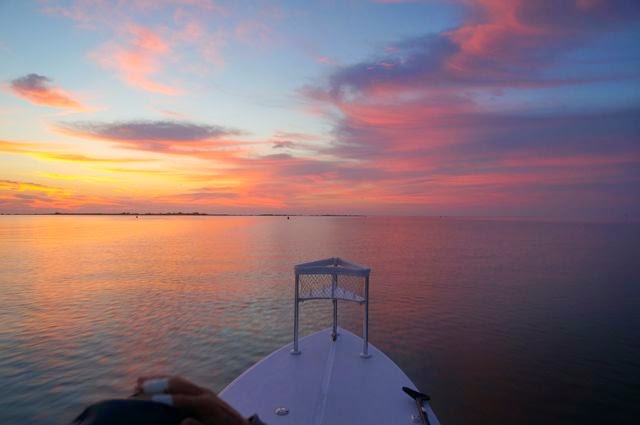 I have guided 10 days in the past two weeks. At the beginning of that period, we were still in the windy phase of spring, and the fishing was tough early, but near-great in the afternoon on the sand. During April and May, the wind can be truly fierce at daybreak. A guide shudders when he looks out the window at 5 am and sees the flags standing rigid and upright, without the semblance of a flutter. Oh well, you say, maybe the birding will be on. We all head straightaway to various birding venues, only to find--this year, at least--that the birds have been there, but over balls of catfish with nary a redfish tail in the mix. It’s been a strange delayed season, perhaps the consequence of such a cold, wet winter. But even during those days, the sand lit up under the bright sun by late morning, and on some memorable days, the reds poured onto the sand in the early afternoon, bringing opportunities that make the Laguna Madre famous as a
 venue that has more in common with the Bahamas than the upper Texas coast.
Randy and I guided Eric Huff and his three friends. Eric is an experienced saltwater flyfisher, but he’d never flyfished the lower Laguna. We fished on two very windy days, but managed to have some good fishing. Eric started the first day landing a beautiful red that was feeding with a few others in a small pass where the current tends to attract baitfish. We saw them feeding, but it was terribly shallow, and I pole the Stilt over a bar separating us and the feeding reds. So Eric hoofed it over there, through knee-deep mud, and was rewarded for his efforts. We went on to fish the sand and catch a few out there each day. But it was tough flyfishing.


Wednesday, April 23, 2014
Never Blame the Fish
This is a pre-publication draft of an article that I've just submitted to Tide magazine. -- GSS
When I was about three years old, my
mother was trying to potty train me, and had finally managed to get me to take
a seat on the mini-throne. After a few fruitless minutes, I said to her, “I can’t
grunt. This pot don’t work.” In retrospect, I had already learned the oldest
excuse in the book: When things don’t work, blame anything other than yourself.
Almost fifty years later, as I poled my Stilt
over a barely submerged bed of turtle grass, the young flyfisher on the bow
finally spotted the redfish about 40 feet away. He began false casting and laid
the Kingfisher spoon out in front of the crossing 27-inch red. The fish
sauntered by the fly, which had landed just a few inches short of the mark. It
was early February in South Cullens Bay on the Lower Laguna Madre, and the
water was low, clear and cold. During
winter, the fish are more sluggish and less willing to go out of their way to
take a fly, so knowing that, I urged the caster to reposition it. Again, the
red seemed unresponsive; but from my vantage point, I could see that the caster
had barely missed the fish’s sight window.
Finally, the angler said, with evident
frustration, “I don’t think he’s going to eat.”
“Cast closer,” I said. He complied, and
the fly landed where the red could see it. Without turning or flaring its
gills, the red picked up the fly and was on. If the angler hadn’t made that
final cast, he would have blamed the fish or the fly, but never his slightly
imprecise presentation.
The Catskill fly fishing legend, Edward
R. Hewitt once said, “It’s not your fly that is the problem. It’s what is on
the other end of the line.” While Hewitt’s words may sound a bit mean-spirited,
they express an important key to mastering the “quiet sport” of fly
fishing––that is, taking full responsibility for what happens in the encounter
with the fish. The good news is, If we are the problem, then we are also the
solution.
Over the years, I’ve concluded that
there two errors that cause us to blame the fly or the fish, thereby limiting
our successes. The first error is assuming that when a fish doesn’t take the
fly, it’s because it’s not hungry, or is interested in something else. Of
course, this may is often true in coldwater fisheries where trout will feed
selectively, but it is much less of a factor on the Lower Laguna Madre, where
reds and trout tend to be nonselective, opportunistic feeders. Saying that a
fish “is not eating” on the Lower Laguna is an excuse on par with “this pot
don’t work:” It brings an immediate end
to any further inquiry, and if there’s anything further left to learn, we’ve
opted out of that lesson.
The second error is underestimating the
impact of one’s presence. Anglers may wade or pole into a sensitive area, and
cast again and again to “turned” fish without realizing that they have created
a problem that didn’t exist before they arrived. I learned this lesson off the
water from my uncle Moody while deer hunting as a teenager. He’d left me in the
woods all day, and when he returned to pick me up, I excitedly told him that
I’d seen about 80 deer. He chuckled and said, “I’ll bet that none of them was
heading in your direction.”
Taken together, these two mistakes
result in a self-perpetuating myth, which thoroughly arrests an angler’s ascent
to excellence. However, counteracting these two errors is a fairly simple thing
if you are willing. First, you need to believe that fish on the flats are
interested in surviving, and that means eating a lot and often, especially easy
meals. Second, you need to set about to minimize the impact of your intrusion
into the fish’s domain. The following ideas and strategies will help you
operationalize your commitment to these two principles, and open up vistas of
flyfishing success heretofore unimagined.
Go slow and depend on your eyesight. It’s important go slow enough to let your eyes fully adjust
to the context. Last year, while guiding an experienced flyfisher, who
regularly catches 10 or more redfish per day, I stopped the boat in the middle
of departing wakes. It was a bit deep for sight casting on foot, but the fish
were there, and my seasoned client preferred to wade. I knew it was possible to
see the fish, even though the mid-afternoon sunlight created a glare on the
water. My client got out of the boat and proceeded to cover a lot of water in
his search for fish. Meanwhile, I stood the whole time within 50 yards of the
boat. It took my eyes a while to adjust to the glare, but I was gradually able
to peer through the glare into the clear water. I stood in the same spot and
enjoyed the spectacle of about 30 reds and a few large trout meandering through
the area over the course of about an hour. When my client hiked back to the
boat, I asked him how he did. “I didn’t see a fish,” he said. I didn’t say
anything, because no one wants to hear, “You really missed it,” even if it’s true.
There is nothing more effective than stopping and letting
your eyes fully adjust to the conditions: It can take a while to perceive
what’s really there. Game fish on the flats are, by nature, subtle in their
movements until the moment of attack; for otherwise, they would alert their
quarry ahead of time and starve to death. It may seem counterintuitive, but
game fish will make less noise and create less of a visual disturbance than
their tiny prey, and so you have to slow down to adjust to their unobtrusive
rhythms. Another tactic along these lines is to imitate a heron’s style of
hunting, which is to freeze every few steps and study the water. Not only does
a stationary profile put the fish at ease, but you can discern subtle movements
more easily if your brain doesn’t have to factor out the movement of your body.
The fish are almost always willing. Reds and trout have periods of active feeding, and then
periods of relative inactivity, but I have found that they are almost always
willing to eat––at least to some extent. You may recall your first course in
biology in which your teacher discussed the firing of a neuron. Once a neuron
fires, it enters an “absolute refractory period” where it’s completely unable
to fire again. A bit later, it passes into a “relative refractory period” in
which it can fire but not as easily as when it’s back to its state of full
readiness. In my experience, reds and trout occasionally enter the equivalent
of an absolute refractory period. It happens when they suddenly stop swimming
and become unresponsive to anything short of a nudge from your rod tip. These
are frustrating moments, because the fish may be feeding one moment, and then
totally unresponsive the next. I have left such “sleeping” fish after having
clients drag flies past their noses for 15 minutes.
Except for when they are in this state
of stupor, reds and trout will exhibit some willingness to eat, albeit at
varying levels of readiness. After a full moon, for instance, redfish will
spend the first few hours of the morning in a highly sensitive state, and will
often spook before your fly hits the water. They can be caught, but they
resemble a hung-over partygoer to whom breakfast may seem like an assault.
Trout, on the other hand, spend most of their day in a “relative refractory
period,” since they feed only two hours out of every 24. Indeed, they spend
most of their time digesting the last huge meal.
So how do you get reds and trout to
take your fly when they are in a state of relative shutdown? By using small
flies and putting them directly in the fish’s path. Trout may feed on six-inch mullet and attack huge flies
when they are actively feeding, but they will more readily take a tiny fly
during their periods of relative inactivity. Understanding that big fish will
take tiny flies almost all the time accounts
for why flyfishing legend Bud Rowland––who holds the Texas state record trout
as well as three of the seven IGFA tippet-class world record trout––can
truthfully assert, “I can get a big trout to eat at any time.” Bud typically
ties his favorite fly, the “numero uno,” on small (size 4 and smaller),
short-shanked hooks. So when people repeat the popular formula, “Use big flies
for big fish,” remember that big flies may not work as well as a small fly
during periods of relative inactivity.
If the fish doesn’t react at all, it’s
usually because it hasn’t seen the fly. In my
previous article (see Tide, March/April, 2014), I
cited several top saltwater flyfishing guides who said that their clients often
overestimate the degree to which a redfish will perceive the fly. As bottom
feeders, redfish tend to be focused on what’s beneath them, and will thus
overlook flies that pass nearby, especially overhead. I have often said to my
clients that redfish will react one way or another when it sees the fly––either
to attack it, or to spook from an unnaturally “aggressive” fly. Similarly,
while big trout will sometimes seem to ignore a a fly, master flyfisher Tom
Kilgore––who once caught 10 trout over 8 lbs. apiece in a single day––told me
that the key to catching a trophy trout is getting the fly in front of the
trout at the same depth. I have seen actively feeding trout go out of their way
to attack a fly, but Kilgore’s experience suggests that a well-fed trout may
require an “in-the-face” presentation to unleash its oppportunistic aggression.
Tame your aggression. It has been said that every great angler possesses the urge
to “capture and to conquer,” but this source of success must be tamed. Indeed,
most anglers approach visible fish much too aggressively, and thus they end up
spooking or turning the fish before they can cast effectively to them.
Remember, the fish on the flats are always moving, and if you’re patient
enough, they will come to you. Even if you are convinced that you have to cover
some distance between yourself and a visible redfish or trout, it’s important
to move slowly enough to prevent sending a “pressure wave” in their direction.
Most fin fish can perceive changes in water pressure in their air bladders from
quite a distance. They may not seem alarmed, but when they perceive the
pressure of your approach, they will simply turn away from you. So tame your
aggression, and become as unobtrusive as one of them. When I guide wading
flyfishers who don’t need my help, I will play a game while waiting for them to
return to boat: I will see how close I can get to the feeding fish before
spooking them. Since I’m not casting to the fish, all of my effort can be
channeled into becoming as stealthy as I can be. It may seem surprising, but I
am often able to come within a few feet of tailing redfish before they spook,
and big trout will become so acclimated to my presence that they sometimes
ignore me after a while. So there’s no reason that you cannot get within
casting distance of feeding redfish and trout, regardless of your casting
ability,––but only if you can tame your impulse to approach the fish
aggressively and cast too soon.
Get down.
On some days, casting from the bow of a skiff is clearly the best way to catch
reds and trout. But the fish can see you better, too. And once they turn from
the sight of you, their willingness to take a fly drops by at least 80%. If you
don’t acknowledge the impact of your intrusion, you may believe that they are
unwilling to eat, when it’s really much simpler than that: They are annoyed.
Real success can be measured, not so much by how many fish you see, but how
many were unaware of your presence before your fly hit the water. When you
achieve the goal of casting without “giving prior notice,” you will discover
that reds and trout are surprisingly willing to take your fly.
Depend on Short Casts. A survey was once done among expert Catskill flyfishers to
see what accounted for their prodigious successes. One thing that distinguished
them was their reliance on short, precise casts. But flyfishers in saltwater often seem to
believe that they should cast as soon as they spot a fish, even if it means casting
short of the mark. Your first cast is an announcement of your presence, and the
fish will often turn before coming into range if you insist on casting too
soon. Reds and trout behave differently when they perceive you. A redfish will
flee at the first sign of your presence, while a big trout may make you believe
that she’s still “in business” by remaining in the vicinity. Never believe that
a big trout is unaware of you! Her apparent nonchalance can be just as
“terminal” as the blistering retreat of a redfish.
In summary, you can dramatically raise
the ceiling of your success by refusing to do the angling equivalent of “blaming the pot.” If, instead, you will
accept the notion that the fish are always willing to take your fly, and that
it’s up to you to do the rest, you will never cease to grow as an angler, and
the elusive ideal of mastery will finally come within reach.
Subscribe to:
Posts (Atom)